When tools and equipment are essential to your business, they have a way of taking over your available space. Power tools pile up on workbenches, larger equipment claims valuable floor space, and supplies that were organized a few months ago can slowly turn into clutter.
The problem isn't always that you have too much equipment. Sometimes, you simply need to make better use of the space you already have.
Whether you're organizing a workshop, warehouse, yard, or jobsite inventory, a smarter setup can help you reclaim valuable square footage, keep frequently used tools within easy reach, and find a better place for the larger equipment that doesn't need to be in your immediate work area.
1. Start by Sorting Tools by How Often You Use Them
Not every tool needs prime real estate.
Before reorganizing your space, separate tools and equipment into a few basic categories:
Keep frequently used tools closest to your primary work area. Less frequently used tools can move farther away, while larger vehicles and outdoor-ready equipment that aren't needed every day may be candidates for off-site outdoor storage.
This keeps valuable workspace from being consumed by equipment that may sit untouched for weeks or months.
2. Take Advantage of Vertical Space
When floor space is limited, look up.
Walls and vertical shelving can dramatically increase your storage capacity without expanding your footprint. Tall shelving units, wall-mounted racks, pegboards, hooks, and other vertical storage systems can give tools and supplies designated places while freeing up the floor below.
Vertical storage can be especially useful for smaller tools, hoses, cords, extension cables, ladders, and other equipment that tends to end up leaning against walls or piled in corners.
Just remember that maximizing vertical space shouldn't come at the expense of safety. Heavy equipment and materials should generally remain on lower or middle shelves, while lighter and less frequently used items are better suited for higher storage locations.
3. Create Zones Based on the Work You Do
Instead of organizing everything solely by size, consider organizing your space around specific jobs or functions.
You might create separate areas for:
A zone-based system helps prevent tools from migrating throughout the space and makes it easier to return everything to the right place at the end of a job.
It can also save time. When related equipment is stored together, you spend less time searching for what you need and more time getting the work done.
4. Make Shelving Work Harder
Industrial shelving shouldn't become a place where miscellaneous equipment goes to disappear.
Use bins, dividers, drawers, or smaller containers to break large shelves into clearly defined storage areas. Labeling each section can make it easier for everyone using the space to find and return equipment.
Shelf depth matters, too. A shelf isn't particularly useful if the tools at the back are impossible to see without unloading everything in front of them. Consider visibility and reach when deciding where equipment belongs so frequently used items remain easy to access.
5. Move Large Equipment Out of Valuable Work Areas
Sometimes the biggest space-saving opportunity isn't reorganizing what's on your shelves. It's looking at what's taking up space on the ground.
Work trucks, trailers, construction equipment, commercial vehicles, and other large assets can occupy a significant amount of space, especially when they're only used for certain projects, seasons, or jobs.
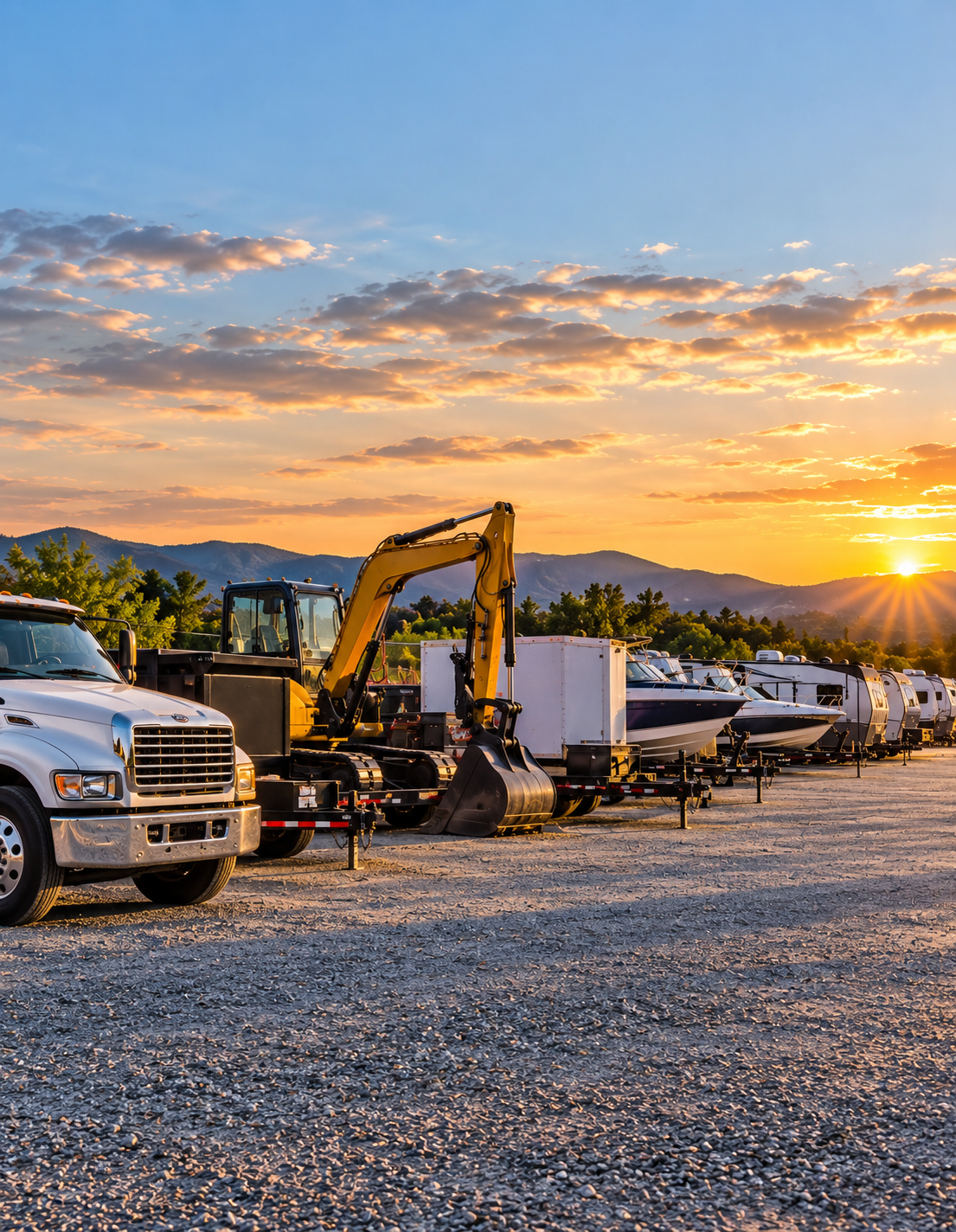
If those vehicles and pieces of equipment are suitable for outdoor storage, moving them to a dedicated off-site parking space can free up room at your primary location without requiring you to give up equipment your business still needs.
Greenbox RV & Boat Storage offers uncovered outdoor storage that can be a practical option for businesses that need additional space for large vehicles, trailers, and outdoor-ready equipment. Rather than letting those assets crowd your shop, warehouse, driveway, or business property, you can keep that valuable space available for everyday operations.
And outdoor storage isn't limited to RVs and boats. You may be surprised by how many types of vehicles, work equipment, and oversized assets can be stored at an outdoor storage facility.
6. Use Clear Containers and Consistent Labels
Small parts can create big organizational headaches.
Fasteners, fittings, replacement components, hardware, attachments, and other small supplies are easier to manage when they're stored in clearly labeled containers.
Create a consistent labeling system that makes sense for your operation. You might organize items by equipment type, job function, project, size, or frequency of use.
Clear containers can also make inventory easier to check at a glance, helping you avoid buying something you already have simply because no one could find it.
7. Keep Aisles and Access Points Clear
Saving space doesn't mean filling every available inch.
You still need enough room to safely move around, retrieve equipment, and use material-handling equipment where applicable. OSHA requires aisles and passageways to be kept clear where mechanical handling equipment is used and requires stored materials to be stable and secure against sliding or collapse.
Instead of allowing equipment to slowly creep into walkways, establish clear boundaries for storage areas and keep those boundaries consistent.
A well-organized industrial space should give you more usable room, not simply fit more stuff into the same area.
8. Give Every Tool a Designated Home
One of the simplest ways to maintain an organized workspace is to make sure every piece of equipment has a specific place to go.
If there's no obvious place to return something, chances are it will end up on a workbench, on the floor, or wherever there's an empty spot.
Designated storage locations also make it easier to notice when a tool is missing. For businesses with multiple employees using shared equipment, that can make day-to-day organization much easier to maintain.
The same principle applies to larger assets. Knowing which vehicles and equipment stay at your primary location and which belong in off-site outdoor storage can help prevent your property from gradually becoming overcrowded again.
9. Reevaluate Your Storage as Your Business Grows
A storage system that worked when your business owned half as much equipment may not work anymore.
Take time periodically to look at what's taking up space. Are there tools you rarely use? Has new equipment been added without a designated storage location? Are vehicles, trailers, or seasonal equipment occupying valuable space even when they're not being used?
As your business grows, your storage strategy should grow with it.
Sometimes reorganizing shelves and work areas is enough. Other times, the better solution is to move large, outdoor-ready assets somewhere else so your primary space can stay focused on the work happening there.
Make Your Space Work Harder for Your Business
Space-saving isn't about squeezing as much equipment as possible into every available corner. It's about deciding what actually needs to be in your everyday workspace and finding a better home for everything else.
Use shelves, wall storage, designated zones, and clear organization systems to make smaller tools and supplies easier to manage. Then take a look at the larger assets occupying your property.
If work vehicles, trailers, construction equipment, or other outdoor-ready assets are taking up space you could put to better use, Greenbox RV & Boat Storage offers uncovered outdoor storage for more than just RVs and boats. Giving those larger assets a dedicated place can help you reclaim valuable space at your business while keeping the equipment you rely on available when you need it.
A little organization can go a long way. And sometimes, creating more room starts with moving the biggest things out of the way.
